





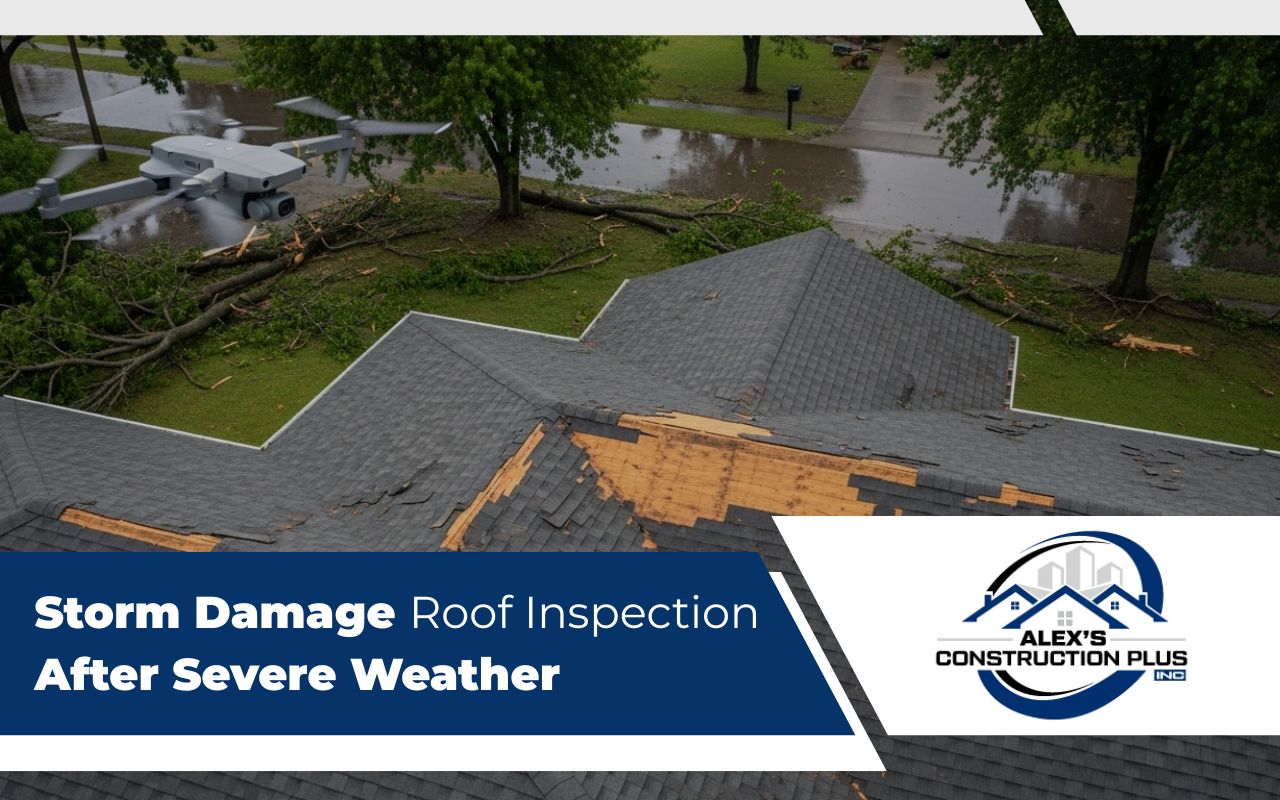
Storm Damage Roof Inspection After Severe Weather
Storms can leave you worried about your roof, especially after heavy rain, hail, or strong wind. A storm damage roof inspection helps you find visible problems early and protect your home before small issues grow.
At Alex’s Construction Plus Inc, we know your roof is your first shield against the weather. With the right steps, you can check for damage safely, document what you find, and know when professional help is needed.
Start With a Safe Exterior Roof Check
Begin from the ground and walk around your home slowly. Look for missing shingles, loose flashing, fallen branches, or debris near the roof edges. Use binoculars when possible, and avoid climbing onto the roof after a storm.
Pay close attention to vents, skylights, chimneys, and roof corners. These areas often show damage first. If you see dents on metal caps or roof parts, the impact may also point to hidden roof damage.
Look for missing, cracked, or lifted shingles.
Check flashing around chimneys, vents, and skylights.
Watch for debris, dents, or loose roof materials.
Spot Wind Damage on Shingles Early
Wind damage on shingles can be easy to miss from a distance. Look for curled edges, lifted corners, torn pieces, or dark areas where granules are gone. These signs can let water move under the roof covering.
Also, check roof valleys and ridgelines because these areas take heavy wind pressure. If shingles are missing, take clear photos and note the location. These details can help later with repairs or insurance questions.
Review Gutters and Downspouts for Drainage Problems
Gutters can show signs of roof trouble after a storm. Remove leaves, twigs, and broken shingle pieces so water can move freely. Clogged gutters can push water under shingles and into the home.
Then, check for sagging sections, loose joints, dents, or overflow marks. If water is not moving toward the downspouts, the system may need repair. Through our storm damage roofing services, we can help find the source of drainage issues.
Clear loose debris from gutters and downspouts.
Look for dents, gaps, and separated gutter sections.
Make sure water drains away from the foundation.
Check Inside Your Home for Water Signs
After the outside check, inspect ceilings, upper walls, closets, and attic access areas. Yellow stains, brown marks, peeling paint, or soft drywall can mean water has entered through damaged roofing materials.
Musty smells can also point to hidden moisture. Take photos of stains, damp spots, and damaged finishes. This step is part of what to do after a storm because it helps connect inside damage with roof problems.
Why Should You Inspect the Attic Too?
The attic often shows roof leaks before other rooms do. Look for damp insulation, dark wood, small light gaps, or wet roof decking. Even a small opening can become a serious leak during the next storm.
Turn off attic lights and check for daylight coming through nail holes or roof gaps. If insulation feels wet or compressed, do not ignore it. During a visit from Alex’s Construction Plus Inc, we can review these signs as part of a full storm damage roof inspection.
Document Damage Before Starting Repairs
Good records make the next steps easier. Take wide photos, close-up photos, and short videos of each damaged area. Add the date, location, and a simple note about what you found.
Keep receipts for temporary repairs, tarps, or cleanup work. These records are useful when you need roof damage insurance tips or when your insurance company asks for proof. Clear files can also help your roofer give a better repair plan.
Save photos and videos in one folder.
Write short notes for each damaged area.
Keep receipts for emergency work or materials.
Frequently Asked Questions
What should I do first after a storm?
Start with a safe ground-level check around your home. Look for missing shingles, debris, gutter damage, and indoor water stains. Then, reach out to our team at Alex’s Construction Plus Inc if you need a closer roof review.
How can I tell if shingles have wind damage?
Look for lifted edges, curled corners, tears, missing granules, or shingles that have moved out of place. These signs can let rain reach the layers under the shingles.
Should I call my insurance company before a roofer?
You can start by documenting the damage, then speak with your insurance company and a roofing professional. A clear inspection report can support your claim and make the process easier.
Is it safe to climb on my roof after a storm?
It is safer to stay on the ground. Wet, loose, or damaged roofing materials can be dangerous. A trained roofer has the right tools to inspect the roof safely.
When should I schedule roof inspection service?
You should schedule roof inspection service soon after strong wind, hail, heavy rain, or visible damage. Fast action can help prevent leaks and reduce repair costs.
Plan Professional Help and Future Roof Care
Some damage needs expert attention right away. Large missing areas, exposed underlayment, sagging roof sections, or active leaks should not wait. With Alex’s Construction Plus Inc, you get clear guidance on inspection results and the next repair steps.
For long-term protection, clean gutters, trim branches, and schedule seasonal roof checks. A storm damage roof inspection after severe weather gives you peace of mind and helps keep your home ready for the next storm. To get help, contact our team at Alex’s Construction Plus Inc today.